
Running a successful technology operation in today’s dynamic landscape requires a deep understanding of your customers and your systems. Amazon CloudWatch has been a trusty weapon in this battle, providing detailed logs and metrics of your AWS resources. But deciphering the cryptic language of logs and crafting the perfect query can feel like navigating a labyrinth blindfolded.
Enter the game-changer: Natural Language Querying in CloudWatch. This AI-powered feature throws away the rulebook and lets you ask questions about your logs and metrics in plain English. Imagine being able to say, “Show me the top 10 product categories by abandoned cart rate in the past week,” and boom, there’s your answer, clear and actionable.
Let’s see how this wizardry translates into real-world retail magic:
- Inventory Optimization: “Which products are generating the most ‘out of stock’ errors in my e-commerce store?” This query instantly reveals items you need to prioritise restocking, preventing frustrated customers and lost sales.
- Peak Season Preparedness: “Compare website traffic and response times during last year’s Black Friday with the current week.” This lets you anticipate traffic surges and proactively scale your resources to avoid embarrassing crashes.
- Identifying Customer Friction Points: “Show me the top keywords searched for on my product pages that lead to high bounce rates.” This exposes confusing product descriptions or poorly structured pages, allowing you to optimise user experience and boost conversions.
- Fraud Detection: “Give me a list of login attempts from unusual locations for my admin panel.” This proactive approach helps you quickly identify and shut down potential security threats.
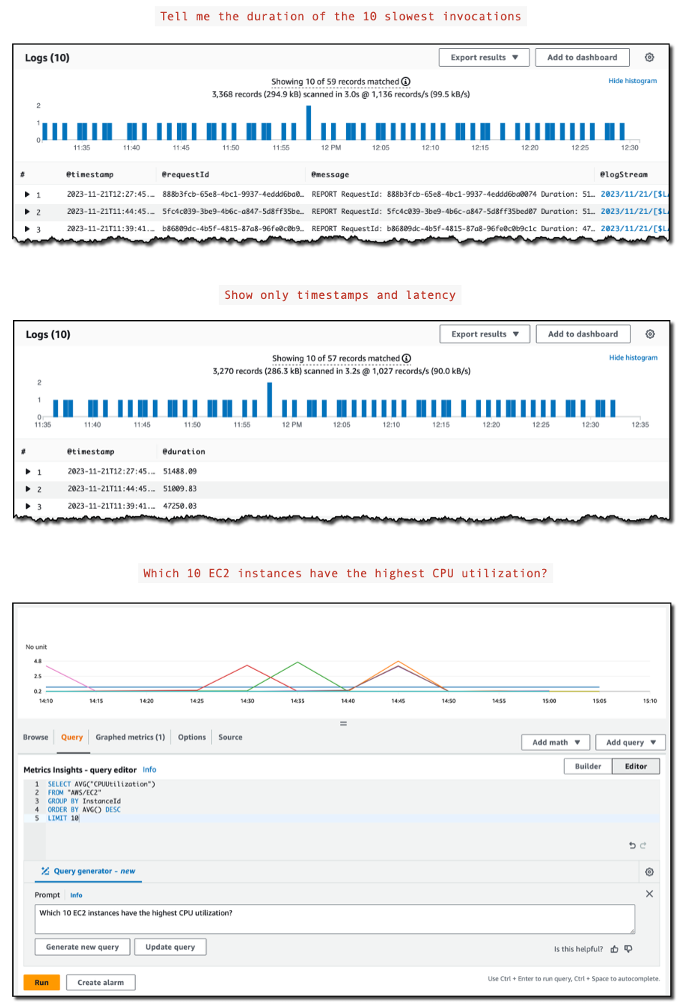
These are just a few examples of how natural language querying in CloudWatch could empower organisations to gain deeper insights and make data-driven decisions. It’s like having a dedicated data analyst whispering actionable insights in your ear 24/7.
Beyond the immediate benefits, this technology fosters a data-driven culture within your organisation. Every team member, from marketing to logistics, can start asking their own questions and unlocking insights hidden within the data. This democratisation of data empowers everyone to contribute to continuous improvement and innovation.
Remember, the more you ask, the more you learn, and the smarter your decisions become. So, ditch the log lingo and embrace the natural language revolution. Your customers, your bottom line, and your sanity will thank you for it.
Go forth and conquer the data mountain, one plain-language query at a time!
Footnotes