
Introduction
Event Management is the foundation of Serice Operations, but so many organisations that I consult with are lost in a world of confusion when it comes to this core principle.
This Blog post has been written for anyone who wants to understand how to go from event hell to Service Ops heaven. So, where to start? Well, at the beginning, I guess. Think of event management as your tech world’s guardian angel. It’s all about keeping an eye on your IT systems to make sure everything runs smoothly and efficiently. Imagine it as a super-skilled team in your corner, ready to tackle any tech hiccup before it turns into a headache. Let’s dive in and see why this is a game-changer for keeping your systems happy and healthy!
The Golden Rules of Event Management
- Be a Proactive Superhero: It’s all about staying one step ahead. Keep a constant watch on your systems to catch those sneaky issues before they throw a party.
- Sort and Strategize: Think of your IT events as a deck of cards. You’ve got to sort them out – which ones need immediate attention and which ones can wait. This way, you’re always tackling the big fish first!
- Automate to Innovate: Why do things the hard way when you can automate? Set up your systems to automatically handle the common stuff so that you can focus on the bigger challenges.
- Document Like a Detective: Keep a detailed log of what went down and how you fixed it. It’s like leaving breadcrumbs for your future self – super handy for solving mysteries down the line!
- Evolve and Excel: The tech world is always changing, and so should your strategies. Regularly update your playbook with new tricks and tips you’ve learned along the way.
The bigger you are, the harder it becomes!: Navigating the challenges
Big organisations come with their own set of unique challenges when it comes to IT event management. It’s a bit like running a big, bustling city – lots of moving parts and plenty to keep an eye on. Let’s break down some of these challenges and add a bit more flavour to them:
- Scaling Up:
- The Growth Game: As your organisation grows, so do your IT needs. It’s like trying to keep a bunch of balloons in the air – the more you have, the harder it gets to manage them all. You need to ensure that your event management processes grow in sophistication and capacity alongside your organisation. This means more advanced tools, more robust systems, and probably a bigger team to manage it all.
- Making Connections:
- The Integration Tango: In a big organisation, you’re often dealing with a patchwork of different systems and applications – some new, some old, each with its own quirks. Getting these to talk to each other seamlessly is a dance of integration. It requires a blend of technical know-how and a deep understanding of how each system operates and interacts. Think of it as conducting an orchestra where each instrument is from a different country!
- Alert Overload:
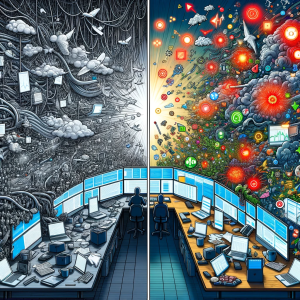
- Cry-Wolf Syndrome: The larger the organisation, the more alerts you’ll likely have to deal with. This can lead to alert fatigue, where your IT staff becomes so overwhelmed with notifications that they might miss the important ones. It’s like having a smoke alarm that goes off so often that you start ignoring it. To combat this, you need smarter alert systems that can filter out the noise and highlight what’s truly important.
- Filling the Skill Pool:
- The Talent Quest: As your systems become more complex, the skill set required to manage them also becomes more specialised. Finding and retaining the right talent can be challenging. It’s a bit like trying to find a needle in a haystack, except the needle keeps moving and changing shape! Investing in training and development and creating a culture that attracts top talent is key here.
- Data, Data Everywhere:
- The Information Avalanche: Big organisations generate vast amounts of data, and sifting through this to find actionable insights can be daunting. It’s like trying to drink from a fire hose. The trick is to have the right data analytics tools and processes in place to turn this flood of information into a valuable resource for decision-making and strategy.
- Process Puzzles:
- The Complexity Labyrinth: In large organisations, processes can become so intertwined and layered that managing them is like navigating a maze. Ensuring these processes are streamlined and efficient is crucial, as convoluted processes can lead to delayed responses and increased downtime. Simplifying and standardising processes wherever possible can keep this complexity in check.
- Resource Allocation:
- The Balancing Act: Effectively allocating resources – be it budget, personnel, or tools – in a large organisation can be tricky. You need to balance the needs of different departments, projects, and initiatives, all vying for a piece of the pie. It’s a balancing act of priorities, often requiring a mix of strategic foresight and tactical flexibility.

92% of companies leveraging IT Event Management experienced an average 42% improvement in real-time visibility into IT infrastructure and performance
How to Tackle These Challenges Like a Boss: Strategic Moves in Event Management
When it comes to navigating the complexities of IT event management in the Enterprise, it’s all about being strategic, creative, and proactive. Let’s expand on how you can rise to these challenges and manage them like a boss.
- Embrace Scalable Solutions:
- The Expandable Framework: Scaling up doesn’t just mean adding more; it means scaling smart. Opt for IT solutions that are inherently scalable – think cloud-based services, modular software architectures, and scalable storage solutions. It’s like building with Lego blocks, where you can add or remove pieces as needed without disrupting the overall structure.
- Seamless Integration:
- The Art of Tech Harmony: Achieving a harmonious integration of various IT systems is like conducting an orchestra where every instrument plays a different tune. Utilise middleware and enterprise service buses (ESBs) that act as translators between different systems. Implement standardised APIs and microservices architectures to foster a more agile and responsive IT environment.
- Bridging Skill Gaps:
- Cultivating a Garden of Talent: Developing an internal culture of learning and growth can help bridge skill gaps. Encourage certifications, workshops, and cross-training. Consider setting up mentorship programs and encourage knowledge sharing through internal tech talks or forums. It’s like nurturing a garden – the right environment and care can lead to a thriving ecosystem of skills and expertise.
- Data Analytics Mastery:
- The Insight Miner: With vast amounts of data, the key is to extract meaningful insights. Invest in powerful data analytics tools and platforms that can process large datasets to reveal trends, patterns, and predictions. It’s akin to having a crystal ball, but one that’s powered by data science rather than magic.
- Streamlining Processes:
- Creating Efficiency Highways: Review and streamline IT processes regularly. Use process mapping to identify redundancies and bottlenecks. Implement automation wherever possible – think of it as setting up conveyor belts in a factory to move tasks along more efficiently. Encourage a culture of continuous improvement, where feedback is valued and used to refine processes.
- Strategic Resource Allocation:
- Playing 3D Chess: Managing resources in a large organisation requires a mix of strategic foresight and tactical agility. Use portfolio management tools to gain a holistic view of all projects and resources. Apply predictive analytics to forecast future resource requirements. It’s like playing 3D chess; you need to think several moves ahead and from different angles.
- Adaptive Change Management:
- The Evolutionary Approach: Implementing change in a large organisation is about understanding its culture and dynamics. Use a phased approach to change, starting with pilot projects and scaling up based on success. Engage stakeholders at all levels, from executives to front-line employees, ensuring buy-in and feedback. It’s about guiding a ship through changing seas – it requires a steady hand, an eye on the horizon, and the flexibility to adjust course as needed.
Your Go-To Resources for Stellar Event Management
- Your Dream Team: Gather a group of event management wizards (or engage with a company that specialises in this area 😎😉) dedicated to keeping your systems in top shape.
- Training Camp: Regularly train your team in the latest IT defence arts.
- Data Decoders: Arm yourself with tools that turn complex data into clear, actionable steps.
- Communication Superhighway: Set up fast and efficient channels to keep everyone on the same page.
The Wrap Up
So, there you have it! IT event management might sound a bit daunting, but with the right approach, it’s like having a trusty sidekick for your tech. By investing in these smart strategies and tools, you’re setting up your systems for success. Remember, a little care and attention to your IT can go a long way in keeping your operations smooth and your tech troubles at bay. Here’s to making IT event management a breeze! 🚀🌟
94% of companies adopting IT Event Management solutions observed an average 38% reduction in production downtime within the first year.
Footnotes

Enjoyed this article? Look out for part two in the series about Alert Management coming next week!
Want to get in touch? Contact me here.