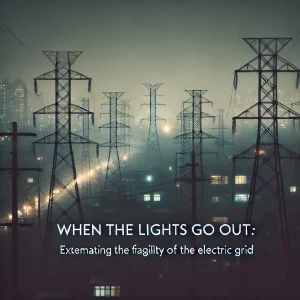

The electric grid is the backbone of modern life, an intricate web of power lines, substations, and control centres that work tirelessly to ensure electricity flows seamlessly to millions of homes, hospitals, industries, and cities. But what would happen if this network—an invisible force so fundamental to everything we do—suddenly failed? This is the story of a catastrophic failure, a complete grid collapse, and its profound consequences for society.
It all began on a typical Thursday afternoon. A fault in one of the major transmission lines went unnoticed—a seemingly minor anomaly in the complex ecosystem of grid management. Due to a combination of human oversight and inadequate alert systems, the fault caused an overload in a neighboring segment of the grid. Within minutes, the issue escalated, creating a cascading failure across multiple transmission lines. Automated systems, designed to isolate faults and maintain stability, struggled to keep up with the speed and scale of the collapse. When the overload reached several key substations, it triggered a domino effect, resulting in a full grid blackout.
Within seconds, entire cities went dark. Hospitals lost power, forcing them to switch to backup generators—generators that had not been tested under prolonged use. In some hospitals, the backup systems failed to activate properly, plunging operating theatres into darkness, halting surgeries mid-procedure, and leaving patients in a state of extreme vulnerability. The staff, despite their professionalism, faced an overwhelming challenge as they tried to manually operate equipment, keep patients stable, and manage without essential digital records.
Traffic lights stopped working, causing chaos on the roads. Emergency services were inundated with calls, but their coordination systems, dependent on electricity, were crippled. Firefighters responding to house fires and ambulance crews attending to medical emergencies found themselves operating without GPS systems or reliable communication channels. The inability to respond efficiently led to tragic outcomes, as response times extended far beyond the acceptable limits.
Residential areas were heavily impacted. People were trapped in elevators, unable to call for help. Heating and cooling systems failed, creating immediate health risks, especially for the elderly and infants. In some high-rise buildings, water pumps, which rely on electricity to function, went offline, leaving residents without water. Panic set in as people rushed to stores to stock up on essentials, only to find that electronic payment systems were down, leaving many unable to buy food or fuel.
Industries faced equally severe consequences. Manufacturing plants were forced to cease operations, resulting in massive financial losses. Assembly lines were halted mid-process, and in some cases, the sudden power cut damaged sensitive equipment. In the chemical processing industry, where temperature control is critical, the power loss created dangerous situations, with some plants reporting near-miss incidents involving hazardous substances. Data centers, the backbone of the digital economy, faced outages as well—those without sufficient backup power saw critical data lost, impacting businesses that relied on real-time analytics and transactions.
The human cost was devastating. Over 48 hours, it was estimated that hundreds of lives were lost due to delays in emergency care, complications during surgeries, and health issues exacerbated by the lack of power. Elderly residents and individuals reliant on life-sustaining medical devices were particularly vulnerable. In care homes, some patients did not survive the cold as heating systems failed, while others suffered from dehydration as water supplies ran out. Many patients in critical care could not receive the treatments they needed in time, and for some, the delay was fatal.
Families were separated, unable to communicate due to dead mobile networks and lack of internet access. People were left stranded, isolated, and frightened, with no way of knowing when help would come. The emotional toll on communities was immense, as neighbours struggled to support one another in the face of an overwhelming crisis.
The financial implications were staggering—regulators imposed heavy fines on the utility company responsible, and compensation claims from affected businesses and households skyrocketed. The national economy took a significant hit, with estimates running into billions of pounds as productivity plummeted, supply chains were disrupted, and consumer confidence eroded. The utility company itself faced existential challenges as lawsuits piled up, and shareholders lost confidence.
Resolving the crisis was a monumental task. Grid engineers worked tirelessly, around the clock, to identify the source of the failure and restore power. The process of bringing the grid back online was slow and delicate—too much power too quickly could result in further damage. The engineers had to manually balance load, restore power segment by segment, and coordinate with field teams spread across vast areas. It took 48 hours before electricity was fully restored, but by then, the damage had already been done.
A detailed investigation revealed multiple points of failure. The initial fault could have been managed had there been better monitoring and alert systems in place. The automated systems, designed to manage overloads, had not been tested adequately under real-world conditions, and critical redundancies were missing. Furthermore, the disaster recovery plan had never been implemented at the scale required for a full grid collapse—it was found to be lacking in both detail and practicality.
This incident served as a harsh reminder of how dependent society is on electricity and how fragile the systems that support modern life can be. The lessons were clear: investment in infrastructure resilience, rigorous testing of failover mechanisms, and comprehensive disaster recovery planning are not optional—they are essential to safeguard against the devastating impacts of a grid failure. The human and financial costs of such a failure are simply too great to ignore. In a world that increasingly relies on constant connectivity and uninterrupted power, the robustness of our electric grid is not just a matter of convenience—it is a matter of survival.