
In this blog, I’m going to have a look at the advanced AIOps and Observability capabilities of the Cisco Splunk platform. Splunk is a platform that brings together IT Service Management (ITSM), AIOps, and Observability into a unified solution that helps enterprises tackle modern IT challenges. By integrating these elements, Splunk aims to provide a more cohesive approach to monitoring, responding to, and optimising IT operations. In this review, we’ll explore how Splunk’s features may help streamline IT workflows and improve efficiency in a practical way.
What is the Splunk Platform?
If you’re new to Splunk, it’s essentially a data platform designed to help you make sense of the complex IT landscape. Splunk collects, analyzes, and visualizes data generated from various parts of your IT systems, like servers, applications, and network devices. At its core, Splunk is all about giving you insights from your data—whether that data is used to track incidents, solve problems, or improve service delivery.
Splunk has its roots in security and log management, initially gaining traction as a tool to make sense of security-related data. Over the past 3-5 years, the platform has evolved significantly, expanding into IT operations and AIOps, becoming a comprehensive solution for managing complex IT ecosystems. In late 2023, Cisco acquired Splunk as part of its broader strategy to enhance its observability and security capabilities, integrating Splunk’s strengths into its existing portfolio alongside solutions like AppDynamics. With this acquisition, Cisco aims to create a cohesive platform that provides end-to-end visibility, security, and intelligence for IT teams—covering everything from application performance with AppDynamics to infrastructure health with Splunk. The platform is now known for bringing together three essential components—IT Service Management (ITSM), AIOps, and Observability. These features help IT teams manage services, automate problem-solving, and gain deep visibility into the health of their systems, all from one place. It’s this combination that makes Splunk a versatile tool for modern IT operations.
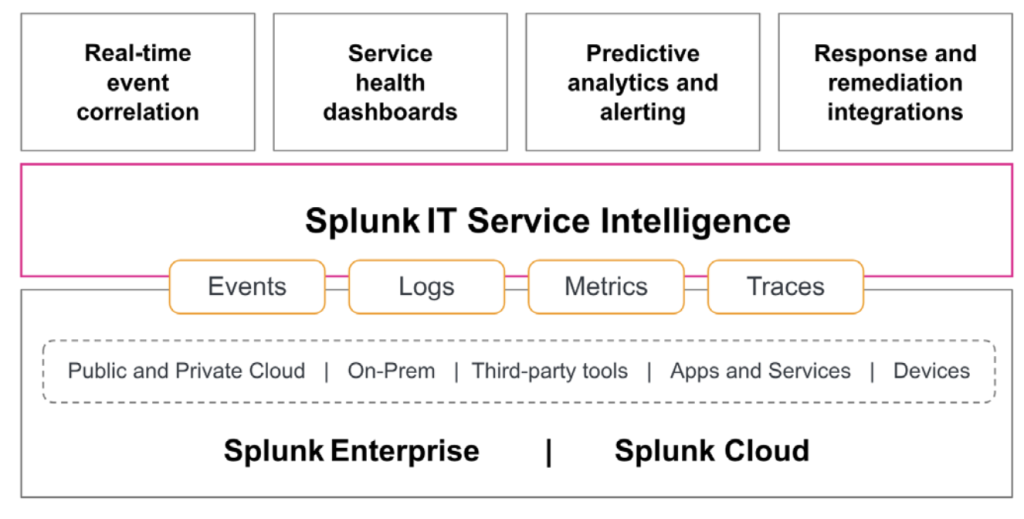
ITSM, AIOps, and Observability—Why They Matter
Traditional ITSM tools have long been the backbone of service management, helping organisations keep track of incidents, changes, and requests. But today’s IT landscapes have moved far beyond the limits of static, on-premises environments. The rise of hybrid and multi-cloud infrastructures has added layers of complexity that need a fresh approach to IT service management—one that leverages real-time insights and intelligent automation.
Splunk’s IT Service Intelligence (ITSI) brings a modern, analytics-driven edge to ITSM, moving from reactive management to proactive prevention. By combining traditional ITSM capabilities with AI-driven insights, Splunk enables IT teams to stay ahead of issues before they impact end-users, reducing outages and driving better overall service quality.
Intelligence with AIOps: Moving from Reactive to Proactive
AIOps is the key to turning data noise into actionable insights, and Splunk is leading the way with its ITSI capabilities. Splunk ITSI leverages Artificial Intelligence and Machine Learning to provide predictive analytics—helping teams identify incidents before they escalate. Imagine reducing mean time to resolution (MTTR) by up to 90% because your system predicts and pinpoints the exact cause of anomalies in your infrastructure. That’s the power of AIOps integrated into your IT workflow.
Splunk’s approach combines multiple data sources, from metrics to logs to traces, into one unified view, giving operators the visibility they need to make informed decisions. The platform’s machine learning-driven anomaly detection and adaptive thresholding help IT teams not just to react quickly but to anticipate and prevent disruptions altogether.
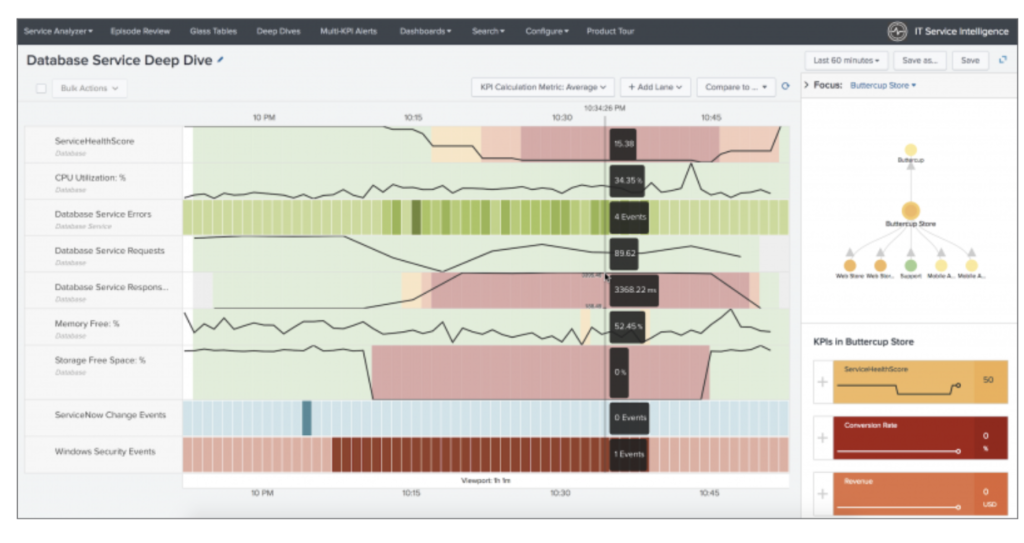
The Three Pillars of Observability: Metrics, Traces, and Logs
Observability is another essential element that Splunk brings to the table, providing the visibility needed to understand and optimise modern distributed systems. Splunk uses the three pillars of observability—metrics, traces, and logs—to help organisations visualise their systems in real-time, pinpoint bottlenecks, and understand root causes of incidents.
Metrics provide you with quantitative data on system performance, while traces map the journey of requests across services, helping you understand where bottlenecks occur. Logs, on the other hand, offer the granular details needed to understand why a problem happened. When combined, these three data types allow IT teams to troubleshoot efficiently and make data-backed decisions that lead to superior system reliability.
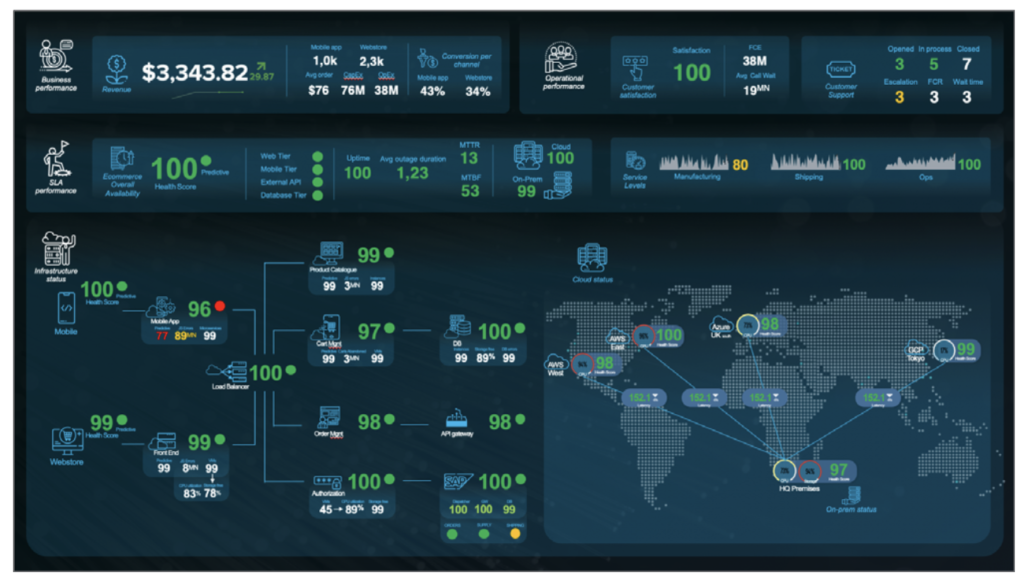
Splunk’s Observability Cloud takes all of these data points and brings them together into a single platform that provides a holistic view of enterprise IT health. With integrations across on-prem, hybrid, and cloud environments, it empowers teams to achieve full-stack observability regardless of complexity.
Bringing It All Together with Enterprise Intelligence
What makes Splunk particularly powerful is the way it unifies ITSM, AIOps, and Observability in a manner that scales with enterprise needs. Splunk’s ITSI provides not just a “single pane of glass” for monitoring but also a platform for automated, intelligent action. By correlating data from disparate sources, Splunk minimises alert fatigue, enabling IT teams to focus on the most critical events without getting buried in false positives.
Moreover, the platform integrates with a broad range of IT Service Management tools, orchestration services, and cloud platforms, making it an adaptable solution for enterprises undergoing digital transformation. Whether your environment is on-prem, hybrid, or multicloud, Splunk’s tools offer the agility, scale, and intelligence you need to stay ahead of the curve.
Pros and Cons: Splunk vs. ServiceNow
So how does Splunk stack up against the leader in the field? In this section, we’ll compare Splunk with ServiceNow, another major player in ITSM and AIOps, to understand their respective strengths and weaknesses. We’ll look at key factors including ITSM capabilities, AIOps features, observability, ease of integration, alert fatigue reduction, scalability, and cost. Each of these factors plays an important role in determining which platform is best suited for specific organisational needs.
To provide a clear overview, we’ve also included a rating (from 1 to 10, with 10 being the best) for each vendor across these different features. These ratings are intended to give you a quick snapshot of how these platforms measure up in each area (please note that these are my opinions only!).
| Feature | Splunk | ServiceNow | Rating (Splunk) | Rating (ServiceNow) |
| ITSM Capabilities | Advanced analytics-driven ITSM with ITSI; integrates AIOps features | Strong ITSM with a wide range of service management capabilities | 8 | 9 |
| AIOps | Uses machine learning for predictive analytics and anomaly detection | Integrated AIOps; focuses on automation and orchestration | 9 | 8 |
| Observability | Full observability with metrics, traces, and logs in one platform | Observability features are limited; focuses more on incident resolution | 9 | 7 |
| Ease of Integration | Seamlessly integrates with various ITSM tools, cloud services, etc. | Excellent integration capabilities, especially with ITSM environments | 8 | 9 |
| Alert Fatigue Reduction | Minimises alert fatigue with intelligent correlation of data | Also features event management, but alert reduction depends on configuration | 8 | 7 |
| Scalability | Scales well across hybrid and multicloud environments | Scalable, but primarily focused on service management | 8 | 8 |
| Cost | Licensing can be high, especially for full observability features | Licensing is also expensive; often used in large-scale ITSM deployments | 6 | 7 |
| Total | 56 | 55 |
As you can see, the comparison between Splunk and ServiceNow is quite close, with Splunk scoring a total of 56 points and ServiceNow closely following at 55 points. Both platforms have their unique strengths. Splunk excels in areas such as AIOps and observability, leveraging its heritage in data analytics to provide deep insights into IT environments. On the other hand, ServiceNow leads in Service Operations capabilities, combining ITSM with automation, AIOps, and workflow capabilities that extend far beyond traditional service management. ServiceNow’s strength lies in its ability to integrate various IT functions, helping organisations streamline service delivery, automate processes, and improve efficiency across different business units.
In terms of cost, both platforms can be quite expensive, but Splunk tends to have higher licensing costs, particularly for full observability features, while ServiceNow also requires significant investment, often seen in large-scale Service Operations deployments. Ultimately, the choice between Splunk and ServiceNow will depend on your organisation’s specific needs—whether you prioritize advanced observability and data-driven automation, or prefer a comprehensive Service Operations platform with strong integration and workflow capabilities.
The Future of IT Operations is Intelligent, Integrated, and Observant
The convergence of ITSM, AIOps, and Observability isn’t just a nice-to-have—it’s the future of effective IT operations. Splunk makes this convergence possible, providing IT teams with a robust platform that scales with growing complexity and enables real-time, data-driven decision-making. By bringing these core components together, Splunk turns data into doing—helping enterprises prevent outages, improve service delivery, and ultimately provide a better customer experience.
If you’re considering AIOps and/or OpenTelemetry for your organisation, it’s a good idea to start by evaluating your current AIOPs maturity. Taking a gradual approach can help you understand the benefits while minimising disruptions. Feel free to contact me if you have questions or need guidance on starting your journey!